When a house needs a repipe
Rusty water, repeating pinholes, and polybutylene are the three histories that justify replacing the supply instead of patching the next leak.
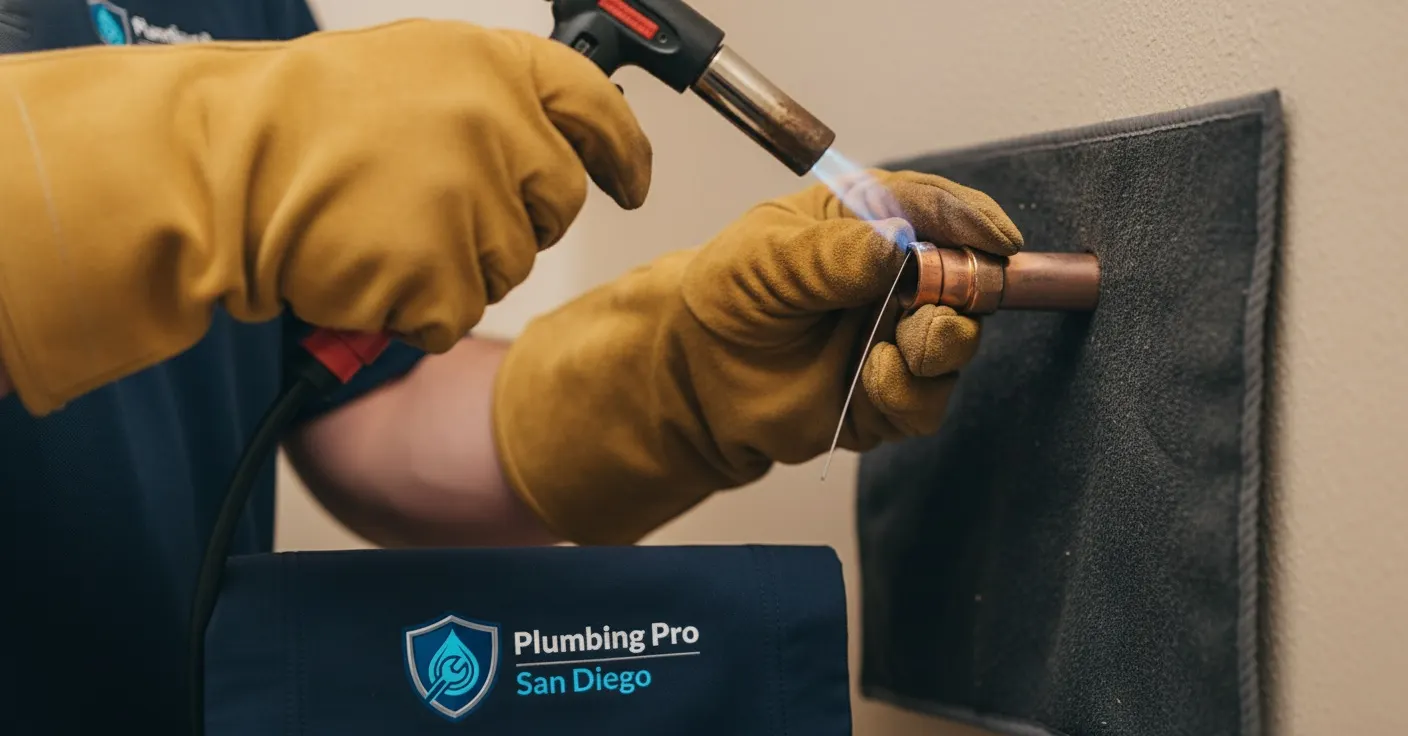
What you'll learn
- How galvanized fails from the inside
- What polybutylene looks like
- Why one pinhole is a repair and three pinholes are a system
Step by step
- Walk the house and write down which fixture is affected, and whether the water is hot, cold, or both.
- If water is actively leaking, close the angle stop for that fixture. If that stop will not move, close the main.
- Take a photo of the water heater label or the leaking fitting before anyone takes it apart.
- Call the line and leave the city, the address, and what you already shut off.
- Ask the plumber for a written price after they see it. Compare that number with the ranges on our service pages.
- Before work starts, look up the contractor license at cslb.ca.gov.
Safety note
If you smell gas, leave the house and call the gas company and 911. Do not hunt for a plumbing fitting.
Rather have a pro handle it?
We match the call to a local plumber across San Diego County. Leave your address if the greeting rolls to voicemail.
More guides
Keep learning.
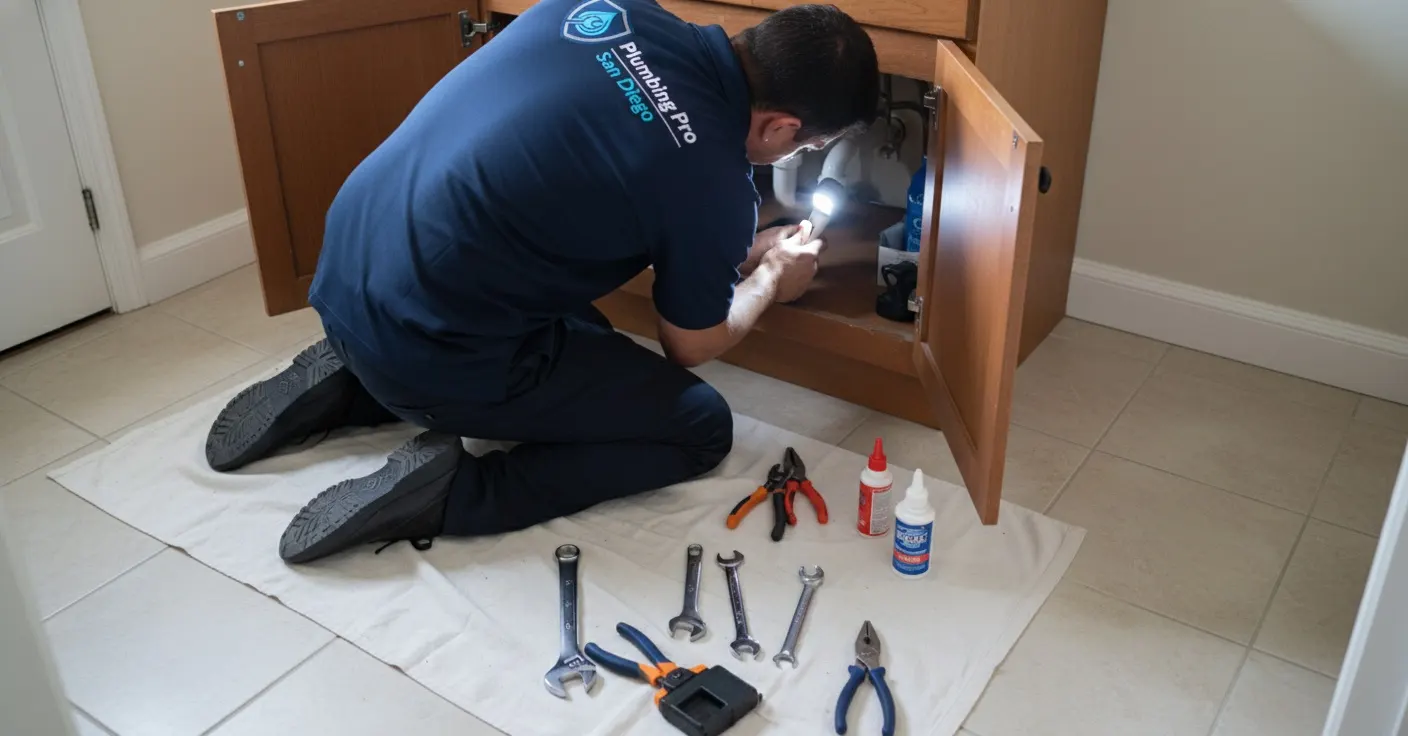
Emergency · 6 min
Shut the water off before the damage spreads
Find the main shutoff and the fixture stops so a burst pipe stops flooding the house while you wait for a plumber.
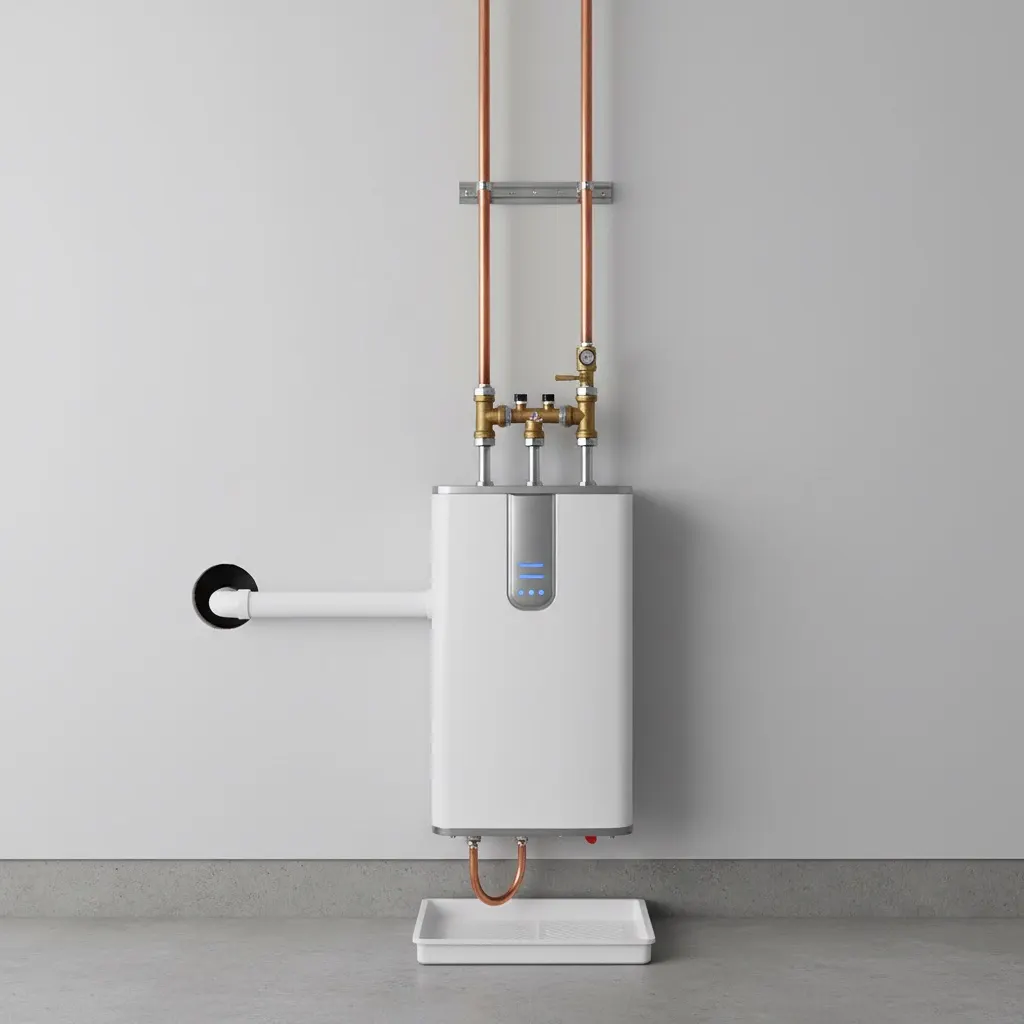
Water heaters · 6 min
When a water heater pilot will not stay lit
If the pilot stays lit only while you hold the knob, the thermocouple is the usual failure. Here is what is safe to check.
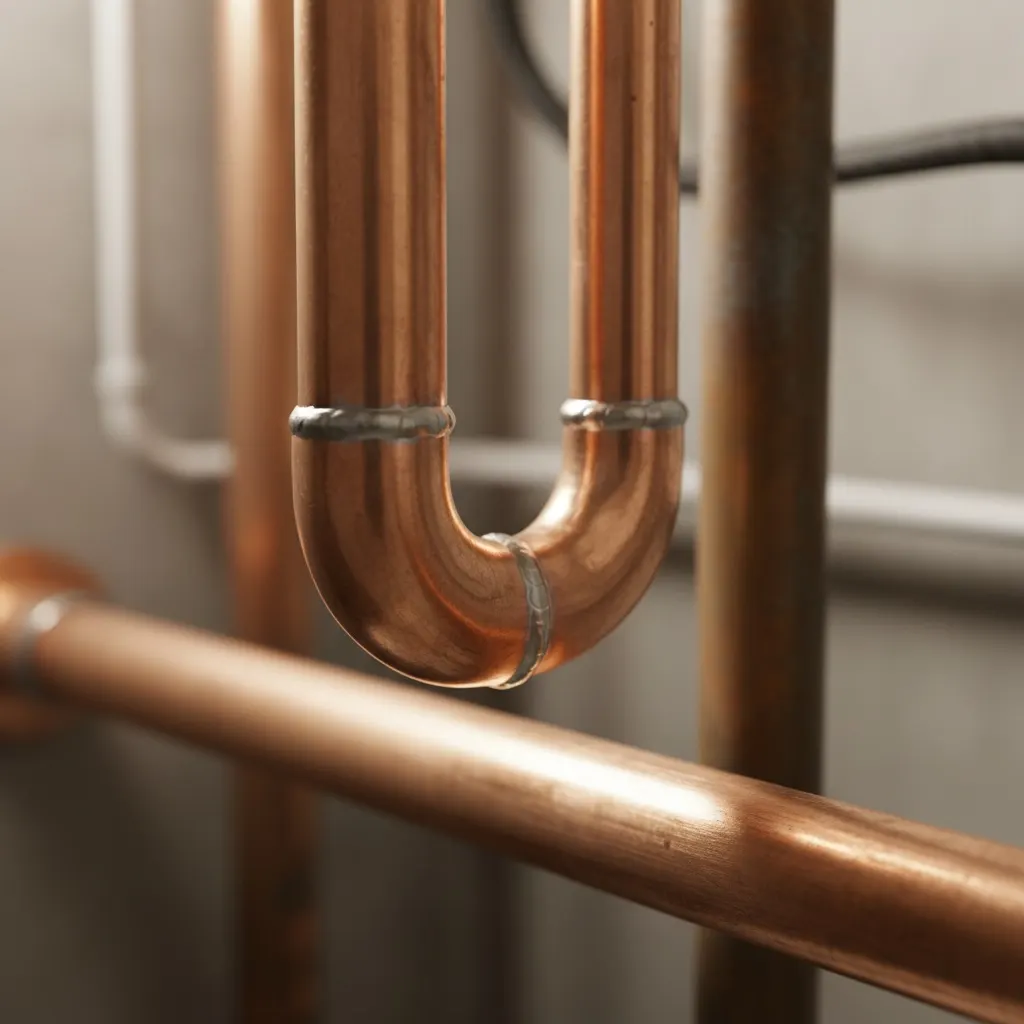
Leaks · 6 min
Signs of a slab leak in a San Diego house
A warm floor, a spinning meter, or the sound of water under the slab are the signs worth a leak detection visit.